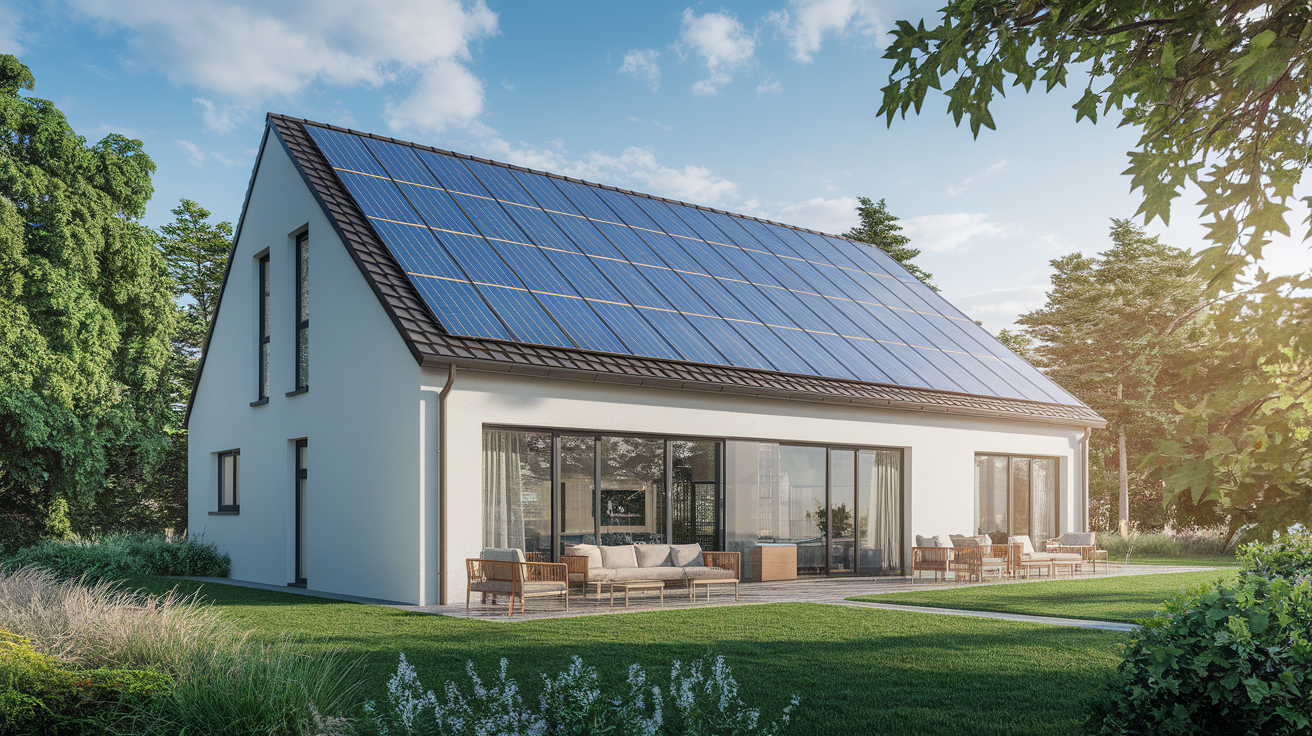
Many companies ask you to budget $1.50-$2.50 per watt for commercial solar in 2026; economies of scale can cut prices, while high upfront capital creates financial risk.
Key Takeaways:
- Typical installed cost for commercial solar in 2026: roughly $0.80-$1.60 per watt, equating to about $80,000-$160,000 for a 100 kW system and $800,000-$1.6M for a 1 MW system.
- Primary cost drivers include system size, module efficiency and quality, racking and inverters, site complexity (roof vs ground), local labor and permitting, and the use of trackers or custom engineering.
- Financing choices (cash, loans, leases, PPAs) change upfront versus lifecycle costs; purchased systems often deliver simple paybacks of about 4-10 years depending on local electricity rates and incentives.
- US federal incentives can reduce net cost by up to 30% through the ITC when eligibility requirements are met; state/local rebates and accelerated depreciation (MACRS) can cut costs further.
- Adding battery storage typically increases project cost by roughly $150-$400 per kWh of capacity, often raising total project cost by 20-50% compared with solar alone.
Types of Commercial Solar Systems and Hardware Configurations
You should match the system type to your site: rooftop fixed-tilt for space-constrained buildings, ground-mount for large acreage, and carport or canopy systems where shading and dual-use apply. Select monocrystalline or bifacial panels and decide between string inverters and microinverters based on shading and maintenance preferences.
Costs shift with mounting, tracking and inverter choices; single-axis trackers raise yield but increase capex and upkeep, while bifacial modules lift upfront price yet can deliver higher yield on reflective sites. You must factor warranty, maintenance access and installation safety into your budget.
- Monocrystalline
- Bifacial
- String Inverters
- Microinverters
- Single-Axis Trackers
| Rooftop (Fixed-tilt) | Lowest mounting cost per kW; may need reinforcement and roof penetrations. |
| Rooftop (Ballasted) | No penetrations; higher ballast weight and wind constraints increase cost. |
| Ground-mount (Fixed) | Higher site prep and foundations; easy access for maintenance. |
| Ground-mount (Tracker) | Increased energy yield and capex; ongoing maintenance and alignment costs. |
| Carport/Canopy | Dual-use value with shading and vehicle protection; elevated structural costs. |
Comparing Monocrystalline and Bifacial Panel Performance
Monocrystalline panels give you the highest nominal efficiency and the best area-specific output, while bifacial modules capture reflected light to boost energy on high-albedo sites; you should assess ground reflectance and tilt to estimate true gains.
Performance Comparison
| Efficiency | Monocrystalline: higher cell efficiency; Bifacial: similar cell efficiency plus rear-side gain. |
| Yield | Monocrystalline: steady; Bifacial: +5-20% on reflective, optimized installations. |
Ground-Mount vs. Rooftop Installation Costs
Rooftop installs typically cost you less per kW when structural support exists, but expect additional fees for roof reinforcement, safety access and penetration sealing to avoid leaks.
Ground-mounted systems require you to budget for grading, foundations and trenching, increasing initial outlay; however, they allow trackers and easier long-term service that can improve lifetime returns.
Energy Storage Integration and Battery Backup Pricing
Battery integration adds capital per usable kWh plus inverter/controls and commissioning; you should compare round-trip efficiency, warranty length and depth-of-discharge to model lifecycle cost accurately.
Sizing the battery for multi-day backup versus daily load-shifting changes price dramatically; you should model critical loads and outage scenarios to avoid oversizing and unnecessary replacement risk.
Any final configuration choices should be validated by you with engineering input and a detailed site quote to determine accurate 2026 pricing.
Pros and Cons of Commercial Solar Investment in the Current Market
| Pros | Cons |
|---|---|
| Lower operating costs and predictable long-term energy pricing | High upfront capital and complex financing structures |
| Federal and state tax credits that materially reduce initial cost | Policy and incentive uncertainty can change economics |
| Improved ESG profile and tenant/market appeal | Interconnection delays and utility upgrade requirements |
| Energy independence and resilience benefits for operations | Ongoing maintenance, inverter replacements, and warranty gaps |
| Depreciation and potential tax advantages over asset life | Structural or roof reinforcement may be required |
| Opportunities for battery pairing and demand charge reduction | Battery costs, lifecycle and disposal liabilities |
| Possible revenue from renewables programs or leases | Panel degradation and performance risk over decades |
Assessing Immediate Tax Credits vs. Long-Term Energy Independence
You should quantify expected incentives-many projects still qualify for a substantial investment tax credit and state adders that can cut initial outlay and shorten payback timelines.
Balancing short-term tax-driven returns against the value of long-term energy independence requires scenario modeling you control, since resilience and fixed energy costs may outweigh one-time savings.
Evaluating Maintenance Liabilities and Structural Requirements
Roof inspections and structural calculations must be completed before procurement so you avoid roof membrane breaches, unexpected reinforcement costs, and insurance complications that erode ROI.
Plan for scheduled O&M, inverter replacements, and clear warranty responsibilities because underestimated upkeep can become a persistent cost center for your asset.
Regularly schedule thermal imaging, torque checks, and electrical inspections to reduce fire and water intrusion risks and preserve both safety and asset value.
How Much Do Commercial Solar Panels Cost in 2026 – Step-by-Step Guide to Commercial Solar Adoption
Step-by-Step Guide Summary
| Step | What you do |
| Preliminary Audit & Sizing | Confirm load profile, roof/land constraints and recommended system capacity to meet your goals. |
| Request Quotes & Vet Developers | Collect bids, compare warranties, performance guarantees and identify red flags. |
| Project Management & Grid Activation | Track permits, installation milestones, safety inspections and interconnection approval. |
Preliminary Energy Audit and System Sizing
Begin by having an auditor analyze your historical energy use and on-site constraints so you can define a target system size that balances capital cost with expected savings; focus on system size, shading, and roof condition when estimating payback and ROI.
Requesting Quotes and Vetting Solar Developers
When you solicit proposals, require line-itemed bids that separate equipment, labor, and incentives so you can compare true cost-per-watt and expected annual production; insist on written warranties and production guarantees.
Ask each developer for references, past project photos, insurance certificates, and clarity on who handles permits and interconnection to spot any potential red flags before contracting.
Compare proposals not just on price but on modeled energy production, inverter and panel warranty lengths, and maintenance options so you prioritize long-term value over the lowest upfront cost.
Project Management from Installation to Grid Activation
Coordinate a detailed schedule with milestones for procurement, structural attachments, electrical work, inspections, and commissioning so you can measure contractor performance against firm dates and minimize business disruption.
Ensure that your team tracks permit approvals, utility interconnection paperwork, and final inspection checklists; missing any of these can delay activation and revenue, so treat interconnection and permits as high-priority items.
Expect the commissioning phase to include performance testing and documentation; require the installer to deliver as-built drawings, O&M manuals, and contact points for warranty claims so your operations team can manage long-term performance.
Advanced Financing Models for Commercial Enterprises
- Capital leases
- Power Purchase Agreements (PPAs)
- Commercial Property Assessed Clean Energy (C-PACE)
Comparing Capital Leases and Power Purchase Agreements (PPAs)
Capital leases place the asset on your balance sheet so you assume ownership and depreciation benefits, but typically carry a higher upfront costno capital outlay and transfer performance risk to the provider; you should compare the levelized cost per kWh and contract terms to decide which lowers your total cost of ownership.
| Capital Lease vs PPA – Quick Comparison | |
|---|---|
| Ownership | Capital lease: you; PPA: provider |
| Upfront cost | Capital lease: higher; PPA: none |
| Risk | Capital lease: you; PPA: provider |
| Tax benefits | Capital lease: available to you; PPA: to provider |
Utilizing Commercial Property Assessed Clean Energy (C-PACE)
C-PACE lets you finance the full cost of a solar system through a property assessment that spreads payments over long terms, often matching asset life so cashflow impact is minimized; you retain ownership while repayment stays with the property, which can be attractive if you plan to hold the site long-term.
| C-PACE – Key Features | |
|---|---|
| Security | Assessment attached to property tax bill |
| Term | Up to 20-30 years |
| Qualification | Subject to local program availability and approval |
| Transferability | Can transfer with property sale |
Repayment is handled via your property tax bill, which can mean non-recourse financing to you personally and longer amortization than typical loans, but you must assess the impact on saleability and lender consents before committing.
To wrap up
From above, you can expect 2026 commercial solar system prices to range roughly $1,000-$1,800 per kW before incentives, with total installations for medium projects commonly between $100k-$600k depending on size and equipment. Incentives, module choice, and labor drive final costs.
You can reduce net cost by pursuing federal and state incentives, selecting higher-efficiency panels if your roof area is constrained, and obtaining multiple bids to compare warranties and performance guarantees.