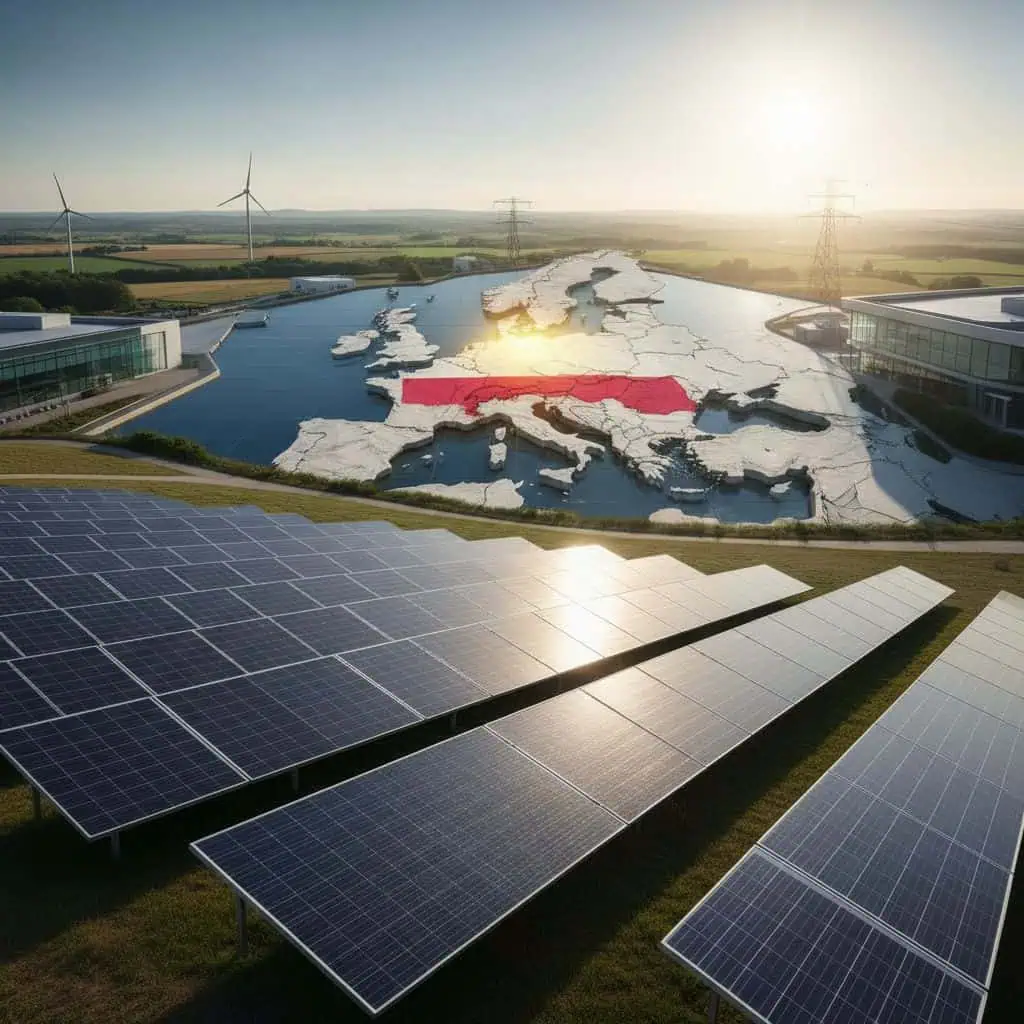
Central Europe offers varied solar prospects, and you must compare high sun hours and strong incentives with grid bottlenecks and shifting policies to choose the country that best fits your project and risk tolerance.
Best Central European Country Solar Energy: picking the best central european country solar energy for 2026 comes down to four variables: annual kWh per kWp installed, residential grant generosity, install cost per kWp, and payback timeline. The best central european country solar energy on a 5-year payback basis is currently Hungary, with Slovenia, Croatia, and Bulgaria close behind. The best central european country solar energy for raw irradiation alone is Bulgaria, but grant timing flips the ranking quickly.
Table of Contents
Key Takeaways:
- Germany has the largest installed solar capacity in Central Europe, offering stable policy frameworks, a mature supply chain, and attractive opportunities for utility-scale and rooftop projects.
- Czech Republic offers high solar irradiance and competitive project economics, making it strong for both large installations and residential systems.
- Austria combines decent solar resource with generous incentives for rooftop systems and growing interest in residential storage integration.
- Poland is the fastest-growing market in the region, driven by auction support and falling equipment costs, though grid and permitting bottlenecks persist.
- Best choice depends on priorities: choose Germany for scale and stability, Czech Republic or Austria for resource-driven returns, and Poland for high-growth potential.
Essential Factors Determining Solar Viability
- solar irradiance
- grid capacity
- feed-in tariffs
- net metering
- permitting delays
Solar Irradiance and Meteorological Constraints
Solar patterns and annual insolation determine seasonal yield; you should compare solar irradiance maps and PV performance ratios across candidate countries to size systems accurately. High summer peaks boost returns, while long winters and low sun angles reduce annual capacity factors.
Clouds, precipitation and extreme weather shape real-world output; you should model cloud cover, snow accumulation and soiling from dust, since severe storms or hail represent dangerous threats to performance and asset longevity.
Legislative Frameworks and National Energy Targets
Policy signals define investment risk; you should evaluate feed-in tariffs, auction frameworks and net metering rules alongside the trajectory of national energy targets that affect market demand and price stability for solar offtake.
Legislation must reduce administrative friction because long permitting windows and opaque grid rules erode returns; you should check typical permit times, land-use constraints and available fiscal incentives that improve project IRR.
Grid Infrastructure and Connection Feasibility
Grid constraints and queue lengths affect deliverable capacity; you should review local grid capacity, interconnection costs and known bottlenecks since high congestion or recurring curtailment can slash expected revenues and delay commissioning.
Thou must demand recent connection studies and factor upgrade timelines into financial models, as hidden connection fees and upgrade requirements often change project economics and require mitigation planning.
Pros and Cons of Investing in Central European Solar
| Pros | Cons |
|---|---|
| Energy independence potential by reducing fossil imports | Regulatory uncertainty from shifting national policies |
| Lower long‑term electricity costs and predictable generation | High upfront capital requirements for large projects |
| Attractive yields in southern CE regions | Grid congestion and curtailment risk in some areas |
| Access to EU green funds and corporate PPA demand | Permitting delays and bureaucratic hurdles |
| Falling module costs improving ROI | Supply chain disruptions for modules and inverters |
| Local job creation and community investment | Land use conflicts and local opposition |
| Scalability across rooftops and brownfields | Variable solar resource between countries |
| Portfolio diversification for investors | Market price volatility and currency exposure |
Economic Benefits and Energy Independence
You gain tangible savings by replacing imported power with local solar, which lowers your exposure to wholesale price swings and enhances energy independence.
Local incentives and EU funding can improve your project returns, giving you access to subsidies and cheaper financing while declining equipment costs boost profitability.
Regulatory Volatility and Supply Chain Constraints
Policy changes across Central Europe can introduce high regulatory volatility, forcing you to adapt contracts or face reduced margins if support schemes shift.
Supply chains remain strained for modules and inverters, which subjects you to delivery delays and sudden cost increases that directly hit project schedules.
Market timing matters: you should secure long‑lead equipment early and structure contracts to mitigate permitting bottlenecks, curtailment risk, and vendor concentration.
What Is the Best Country in Central Europe for Solar Energy
Market Entry Steps
| Step | Actions & Risks |
|---|---|
| Feasibility | Assess solar irradiance, grid capacity, permits, land costs and environmental constraints |
| Regulatory | Review auctions, permit timelines and policy change risk |
| Finance | Map subsidies, PPA structures, feed-in tariffs and currency risk |
| Partnerships | Secure local EPC/O&M to reduce execution and compliance exposure |
Conducting Preliminary Feasibility Studies
Begin with a resource and grid assessment so you can size the project against demand; you should commission site surveys, environmental checks, and local permit timeline estimates. Focus on solar irradiance, access and soil conditions, and any grid constraints that could invalidate assumed generation or delay connection.
Securing Financing and Navigating Local Subsidies
Assess available subsidy programs, auction schedules, and typical PPA structures to test bankability; you should model scenarios with varying tariffs and include feed-in tariffs upside alongside policy change and currency risk as downside cases.
Consider structuring finance with long-term PPAs, a mix of local bank debt and sponsor equity, and guarantees from development institutions to improve terms; you can also use insurance to cover political or payment risk. Prioritize clauses that protect you from short subsidy windows and sudden regulatory shifts.
Expert Tips for Optimizing Solar Performance in the Region
Maintenance Strategies for Temperate Climates
You should inspect panels after storms, clear snow and debris promptly, and trim shading trees to protect solar panels performance in Central Europe. Regular checks on mounting, inverter temperature, and wiring reduce risk of hail or moisture damage and help sustain solar energy yield.
- Inspect after winter storms and high winds
- Clean panels seasonally to avoid soiling losses
- Review inverter logs and maintenance reports monthly
Leveraging Digital Monitoring and Storage Solutions
Install real-time monitoring to track string-level output and detect shading or inverter faults before they cut generation, and pair intelligent inverters with battery storage to smooth output and boost self-consumption of solar energy.
The software should push threshold alerts, enable remote firmware updates, and provide clear dashboards so you can schedule upkeep, set export limits, and size batteries to match demand for improved grid resilience.
Conclusion
Drawing together, you should focus on solar irradiance, policy support, and grid integration when choosing a country. Hungary and Austria deliver strong sun and attractive incentives; Germany offers the most mature market and reliable installers.
Assess local yields, permitting timelines, and tariff structures to decide which country best meets your priorities.
Key Takeaways: Best Central European Country Solar Energy
- Best Central European Country Solar Energy 2026 leader — Hungary takes the payback crown thanks to high irradiation and a generous residential grant programme.
- Best Central European Country Solar Energy runner-up — Slovenia and Croatia tie for second on payback; Croatian coast outperforms inland by 12-18%.
- Best Central European Country Solar Energy for irradiation alone — Bulgaria has the highest annual kWh per kWp, but install costs are higher than expected.
- Best Central European Country Solar Energy grant rule — every grant programme in the region opens annually with limited windows; timing matters more than chasing the cheapest country.
- Best Central European Country Solar Energy payback range — 5-9 years across all viable markets in 2026, vs 11-14 years just three years ago.
Apply: Best Central European Country Solar Energy Decision
Three high-leverage moves to lock in your best central european country solar energy choice:
For wider research behind best central european country solar energy, see the Solar Energy Industries Association.
FAQs: Best Central European Country Solar Energy
Q: Which Central European country is the best overall for solar energy?
A: Germany is the best overall for solar energy in Central Europe based on installed capacity, market maturity, and supportive policy frameworks.
Germany had over 60 GW of solar PV installed by 2023, a large domestic installer base, and well-developed grid integration and storage markets.
High retail electricity prices improve project economics for residential and commercial systems, while auction programs and rooftop incentives keep utility and distributed markets active.
Hungary and Austria score higher on solar irradiation per square meter, but they do not match Germany’s market depth or industrial ecosystem.
Q: What metrics should I use to compare Central European countries for solar?
A: Useful metrics include solar irradiation (peak sun hours), installed capacity per capita, policy stability and incentive design, grid connection timelines and capacity, permitting complexity, electricity retail prices, land or rooftop availability, and battery subsidy programs.
Financial metrics to model include levelized cost of electricity (LCOE), payback period, internal rate of return (IRR), and exposure to policy or auction price risk.
Local permitting and grid queue duration often determine real-world project timelines more than theoretical resource numbers.
Q: Which country is best for residential solar in Central Europe?
A: Germany offers the strongest case for homeowners thanks to attractive economics driven by high retail electricity prices, clear compensation rules for exported power, and a large professional installer network.
Austria provides high-quality subsidy programs for rooftop systems and batteries, improving payback for smaller installations.
Hungary and Slovenia have higher solar irradiation, which shortens payback, but homeowners in those countries may face less mature support schemes and fewer turnkey installers.
Q: Which country is best for utility-scale solar projects and investors?
A: Poland and the Czech Republic are among the most attractive for utility-scale investors because of available land, active auction-based procurement, and growing corporate offtake markets.
Hungary combines strong irradiation with streamlined permitting in many regions, producing competitive yields.
Germany remains attractive for corporate PPAs and hybrid projects with storage, but high competition for land and saturated auction prices compress margins compared with emerging Central European markets.
Q: What are the near-term trends and how should I choose where to invest or install now?
A: Falling module and battery costs, increasing corporate demand for renewables, and stronger grid flexibility measures will accelerate deployment across all Central European countries.
Policy stability and predictable auction calendars will determine investor confidence in each market.
To choose now, quantify irradiation and retail price sensitivity, confirm local permitting and grid connection lead times, model returns under conservative incentive scenarios, and work with an experienced local developer or installer to validate site-level assumptions.