Solar Panels Romania subsidies are some of the best in CEE. The Casa Verde Fotovoltaice scheme on solar panels Romania covers up to 20,000 RON per household. Here are 7 proven savings paths.
Table of Contents

Table of Contents
Solar panels Romania
in 2026 deliver 7-10 year payback for homeowners thanks to expanded national subsidies and falling install costs.
This solar panels Romania guide walks through real costs, subsidy schemes, and the ROI math so you can decide if solar panels Romania-wide are worth it for your roof.
There’s a clear guide to installing solar panels in Romania that shows cost ranges, scam and permitting risks, and available subsidies and long-term savings so you can decide with confidence.
Key Takeaways:
- Typical residential system costs €800-€1,400 per kW installed (2024 market); a 4 kW system therefore costs roughly €3,200-€5,600 before subsidies.
- National and EU funding options exist, with Romania’s Casa Verde/AFM schemes among the main national programs; grant amounts and eligibility vary by call and can significantly reduce upfront costs.
- Household payback periods usually range from 4-10 years depending on self-consumption, local electricity prices, system size, and use of batteries; lifetime savings over 20-30 years commonly exceed installation expense.
- Grid-connection and prosumer rules determine compensation for exported electricity; export tariffs or net-metering arrangements are generally less favorable than retail consumption rates and have evolved recently.
- Roof orientation, shading, system component quality, installer warranties, and permitting time affect performance and total cost; include inverter and battery costs when comparing quotes.
Photovoltaic Technology in Romania: System Types and Components
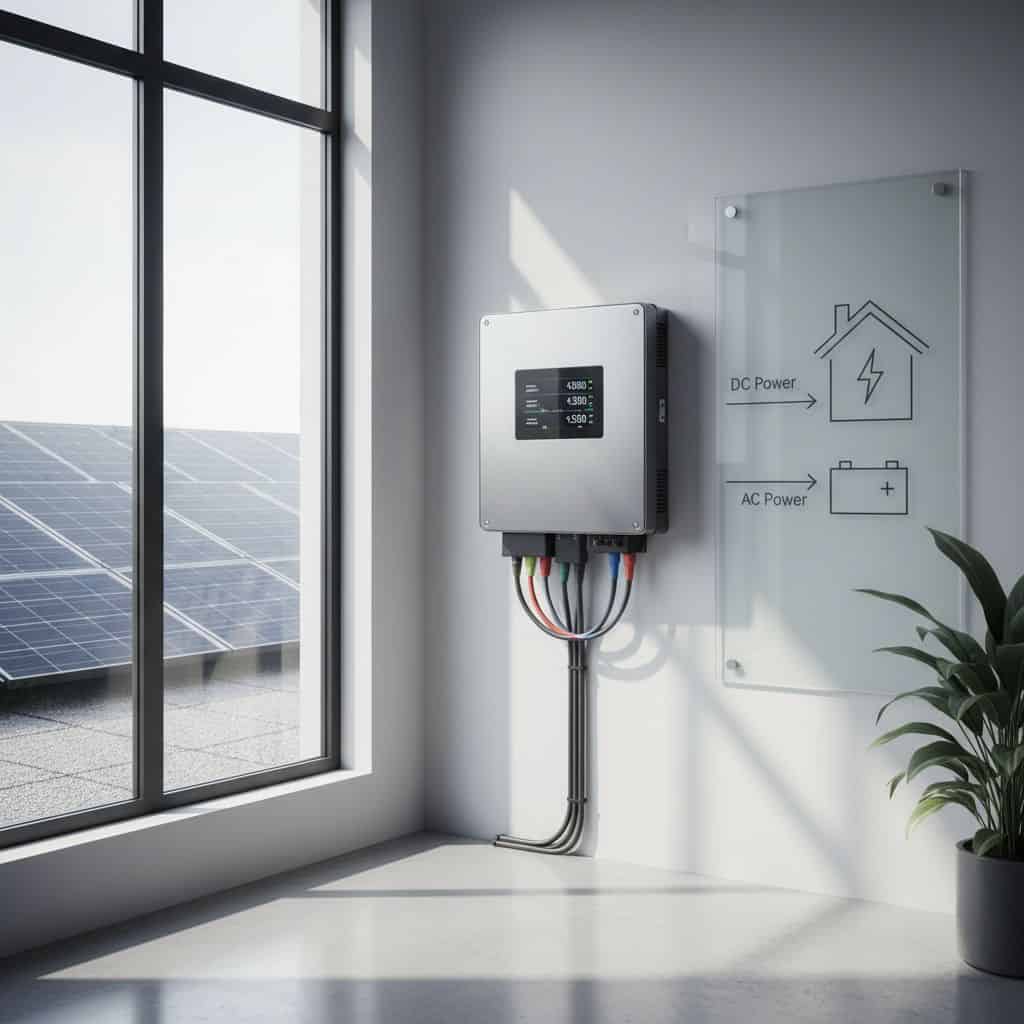
Panels show you the typical PV building blocks used in Romania: module arrays, inverter options, mounting structures, and optional battery storage, all of which determine performance, cost and safety; poor design can create electrical hazards while correct sizing delivers long-term savings. Equipment choice also affects maintenance and permit complexity. Thou must confirm grid compatibility, licensing and subsidy rules before final purchase.
- solar panels
- inverter
- battery storage
- mounting
- metering
| Component | Role |
| Modules | Generate DC power |
| Inverter | Convert DC to AC |
| Battery | Store excess energy |
| Mounting | Secure panels, affect orientation |
| Metering | Track export/import for tariffs |
Comparing On-Grid, Off-Grid, and Hybrid System Types
Systems present three practical choices: on-grid (lower cost, relies on network), off-grid (full autonomy, higher battery cost) and hybrid (backup plus export options) so you can align reliability with budget. You should assess outage risk, subsidy fit and expected payback. Recognizing trade-offs ensures you pick the configuration that meets site and budget constraints.
- on-grid
- off-grid
- hybrid
- net-metering
- backup
| System Type | Best for |
| On-grid | Lower cost, export revenue |
| Off-grid | Remote sites, full independence |
| Hybrid | Backup with export flexibility |
| Microinverters | Shaded roofs, panel-level control |
| String inverters | Cost-effective for uniform arrays |
High-Efficiency Panel Technologies Suited for the Local Climate
Modules like monocrystalline, PERC and TOPCon give you higher yields in Romania by improving low-light and heat performance, reducing degradation and increasing annual output. You should prioritize low temperature coefficients and strong manufacturer warranty.
- monocrystalline
- PERC
- TOPCon
- low degradation
- warranty
| Technology | Advantage |
| Monocrystalline | High efficiency, compact |
| PERC | Better low-light yield |
| TOPCon | Lower degradation rates |
| Half-cut cells | Improved shade tolerance |
| Dual glass | Enhanced durability |
Technology selection affects long-term returns: you should compare measured degradation, actual temperature performance and warranty terms, and consider microinverters or optimizers where shading losses threaten output.
Navigating Government Subsidies and Financial Support
Eligibility Requirements for the AFM Casa Verde Program
You must be a Romanian natural person or legal occupant with verified property rights, submit an installer quote and technical data, and ensure the residence meets utility connection rules. Household applicants receive priority; businesses are usually excluded.
AFM Casa Verde – Eligibility Breakdown
| Applicant | Romanian natural persons or legal occupants with ID and ownership proof |
| Property | Residential buildings with valid address and utility connections |
| Required documents | ID, deed/rental contract, installer quote, technical specifications; missing papers cause rejection |
| Technical limits | System size and component standards per AFM rules |
Step-by-Step Application Process for National Solar Grants
Apply via the AFM portal: register, upload identity and property documents, attach the installer proposal and technical sheet, then submit for review; incomplete or incorrect submissions are the most common cause of denial.
Application Process – Key Steps
| Registration | Create AFM account and verify identity |
| Document upload | Submit ID, ownership, technical proposal, installer certification |
| Evaluation | AFM checks eligibility and technical compliance; verification may take several weeks |
| Contracting | Sign grant contract and schedule installation |
| Inspection & payment | Final inspection required before reimbursement |
Prepare a realistic timeline, keep certified installer certificates on hand, and track portal deadlines; missing deadlines or using uncertified equipment can void funding.
Application Tips & Timelines
| Timeline | Expect weeks for review and additional time for inspection |
| Common pitfalls | Incomplete files, non-certified installers, and technical mismatches |
| Best practice | Keep organized copies and confirm installer compliance before submission |
| Risk | Delayed inspections or documentation errors can delay or cancel reimbursement |
Implementation Guide: From Consultation to Grid Connection
Step-by-Step Workflow for Professional System Installation
You agree the scope and schedule, then the installer performs a site survey, structural check and electrical design; the crew installs panels and inverter, completes safety tests and hands over documentation so the grid connection proceeds without surprises.
Installation Workflow
| Stage | Action (you / installer) |
|---|---|
| Consultation | You: accept quote / Installer: site survey & proposal |
| Design & Permits | You: provide documents / Installer: technical project, apply for permits |
| Installation | You: ensure access / Installer: mount panels, wire inverter, earthing |
| Commissioning & Metering | You: confirm handover / Installer: testing, DSO meter change, connection |
Legal Procedures for Obtaining Prosumer Status in Romania
Register your project with the Distribution System Operator (DSO) and submit identity, property proof, technical project and installer declaration; you must secure authorization and pass the DSO inspection before official prosumer recognition.
Expect processing times of several weeks; you will sign a contract with your supplier for netting or injection terms and the DSO will install a bidirectional meter, so you should verify all signatures and technical approvals to avoid fines or delays.
Evaluating the Pros and Cons of Residential Solar Power
Pros and Cons
| Pros | Cons |
|---|---|
| You cut electricity bills and hedge against price hikes; lower bills. | You face a significant upfront cost before savings begin. |
| You can access state and EU support to shorten payback; subsidies. | You must complete detailed applications and paperwork; complex process. |
| You reduce household CO2 emissions and local pollution. | You depend on sunlight and face variable output in cloudy seasons. |
| You often increase resale value for buyers who value energy savings. | Your roof orientation, shading and structure can limit viability. |
| You gain partial energy independence during outages with batteries. | You incur added cost and maintenance for batteries and inverters. |
| You benefit from low operating costs and predictable long-term savings. | You may wait months for permits, inspections and grid-connection. |
| You can export surplus generation under export tariffs where available. | You face export limits or low feed-in tariffs that reduce value. |
| You support national renewable targets and gain social value. | Poor installation increases the risk of electrical faults or fire. |
Environmental and Financial Pros of Transitioning to Renewables
You will cut household emissions immediately and lower your exposure to volatile electricity prices while benefiting from available Romanian grants and EU funds; subsidies can shorten payback significantly.
Beyond bills, you help reduce local air pollution and long-term climate risk, and you often increase your property’s market appeal to buyers who value energy efficiency; lower CO2 is a clear positive.
Technical Limitations and Bureaucratic Cons for Modern Homeowners
Solar panels perform worse on shaded, steep or north-facing roofs, so you may see reduced output that extends payback; battery systems raise complexity and cost.
Equipment and installation require certified technicians, and you must plan for permits, grid-connection agreements and inspections that can delay commissioning; permit delays affect timelines.
Policy and utility procedures in Romania sometimes require multiple approvals and technical audits, so you should budget extra time and choose installers who manage paperwork to lower risk and avoid costly rework.
Solar Panels in Romania – Costs Subsidies and Savings – Expert Tips for Maximizing Energy Savings and ROI
You should size your installation to match typical consumption, pick high-efficiency solar panels and a reliable inverter, and claim available subsidies to shorten payback. Monitor production and address shading or soiling quickly to protect output and warranties. The combination of optimized design, incentives and battery storage improves your ROI.
- Use monitoring to spot dips
- Claim subsidies and tax benefits
- Choose long warranty components
Operational Tips for Maintaining Peak System Performance
Inspect mounts, wiring and panel surfaces regularly, clear debris and trim nearby vegetation to prevent shading and losses. Check inverter logs and daily monitoring data to detect faults early and keep records for warranty claims. Knowing when a fault is beyond DIY and calling a certified technician avoids dangerous mistakes and preserves system life.
- Schedule periodic professional electrical checks
- Perform gentle cleaning to maintain output
- Keep inverter firmware and warranty docs up to date
Strategies for Optimizing Self-Consumption to Reduce Monthly Bills
Shift high-use appliances to peak production hours, run washing, heating and charging during daylight, and set timers or smart schedules to increase self-consumption. Prioritise loads you can move and monitor real-time generation to adapt. The more you self-consume, the lower your monthly electricity costs.
- Use smart plugs and timers for appliance scheduling
- Time EV charging to match solar production
- Track consumption with home energy monitoring
Install a home energy management app or smart meter so you can automate shifting, identify wasted loads, and refine schedules to boost day-to-day savings.
Future-Proofing Investments with Battery Storage and Smart Inverters
Consider adding battery storage and smart inverters to capture midday excess, limit exports on net-metering schemes and time-shift usage to expensive periods. Size batteries for realistic autonomy and check round-trip efficiency and warranties before buying to protect returns.
- Match battery capacity to typical surplus and backup needs
- Choose smart inverter features like export control
- Factor in warranty and predicted degradation
Upgrade firmware-enabled inverters and select battery systems with transparent performance data so you can adapt to tariff changes and grid services opportunities while protecting long-term savings.

Summing up
You who install solar panels in Romania will face upfront costs but have access to national and EU subsidies that lower initial investment and installation hurdles.
Government grants and local programs often cut purchase costs, while reduced electricity bills and potential export of surplus power produce savings that typically yield a payback period of about 5-10 years depending on system size and consumption.
You should compare installers, incentive deadlines, and grid-connection terms to maximize savings.
Key Takeaways: Solar Panels Romania
- Solar panels Romania payback averages 7-10 years for a 5 kW system once national subsidies and net metering credits are stacked.
- Solar panels Romania cost in 2026 runs €1,100-€1,400 per kW installed — among the lowest in the EU for full turnkey systems.
- Solar panels Romania subsidies via Casa Verde Fotovoltaice can cover up to €3,000 per household for grid-tied installs.
- Solar panels Romania ROI improves further with battery storage as Romania moves to dynamic time-of-use tariffs.
- Solar panels Romania installers should hold ANRE certification and offer at least a 10-year workmanship warranty.
Apply Solar Panels Romania to Your Home
Use these guides to compare solar panels Romania options with nearby markets and pick the right installer:
- Solar panels Romania vs Slovenia — how the two markets compare
- Solar panels Romania vs Bulgaria — homeowner subsidy breakdown
- Solar panels Romania ranked among the best Central European solar markets
For independent industry data on solar costs and policy, see the Solar Energy Industries Association.
Key Takeaways: Solar Panels Romania
- Casa Verde subsidy on solar panels Romania covers up to 20,000 RON per household.
- Payback for solar panels Romania is 6-8 years with subsidies, 12-14 without.
- Net metering still active for solar panels Romania — exports balance imports at retail rate.
- Battery rebates with solar panels Romania add to subsidy stack in 2026.
- VAT discount on solar panels Romania brings effective cost down further for primary homes.
Apply Solar Panels Romania Now
Installing solar panels Romania starts with Casa Verde registration plus 3 quotes from certified installers. Subsidy timing matters — apply during open windows.
- Slovenia’s solar panels Romania equivalent
- Croatia compared to solar panels Romania
- Baltic states vs solar panels Romania
For authoritative solar industry data see the Solar Energy Industries Association.
FAQs: Solar Panels Romania
Q: How much do solar panels cost in Romania for a typical home?
A: Typical installed cost for a residential system ranges approximately €1,000-€2,000 per kW (about 4,900-9,800 RON/kW), depending on component quality and installer.
A 3 kW rooftop system therefore commonly costs €3,000-€6,000 (roughly 15,000-30,000 RON) and a 6 kW system €6,000-€12,000 (30,000-60,000 RON).
Price drivers include panel brand and efficiency, inverter type (single/three-phase, hybrid), mounting and roof work, electrical upgrades, permitting, distance to grid connection, and whether a battery is added (batteries typically add 50-100% to system cost).
Q: What subsidies and grants are available in Romania for residential solar?
A: National grants are administered by the Administrația Fondului pentru Mediu (AFM) through programs often branded as “Casa Verde” or similar calls that specifically support small photovoltaic systems; eligibility normally requires property ownership, single-family status, and installation by an authorized company with required documentation (deed, ID, technical paperwork).
Grant amounts and application windows change by call; past rounds covered several thousand RON or a portion of equipment costs. Local municipalities and EU-funded regional programs sometimes offer additional co-financing.
Registration as a prosumer with ANRE and meeting technical connection requirements is usually required to access support. Consult the AFM and ANRE websites or an accredited installer for current calls and exact eligibility rules.
Q: How long does it take for solar panels in Romania to pay back the investment?
A: Payback depends on system cost, household self-consumption, irradiation at the site, and electricity prices.
Example calculation: a 3 kW system producing about 1,100 kWh/kW-year yields ~3,300 kWh/year; at 0.7 RON/kWh of avoided purchase cost that equals ~2,300 RON/year in savings. If net cost after grants is 15,000 RON, payback would be around 6.5 years.
Typical payback ranges from roughly 5 to 12 years for grid-tied systems without batteries; adding batteries typically lengthens payback by several years.
Include maintenance and inverter replacement (common at 10-15 years) when planning lifetime returns.
Q: Can I sell surplus electricity back to the grid and how are exports compensated?
A: Households can export surplus electricity but compensation rules depend on current ANRE regulations and supplier contracts.
Small prosumer regimes commonly use netting or net-billing where exported energy creates credits or is compensated at a defined rate; detailed terms (credit expiry, transferability, meter requirements) are set by ANRE and individual suppliers.
Registration as a prosumer and smart metering are normally required for export and compensation.
Ask your distributor or a certified installer for the latest net-metering/net-billing framework and the expected compensation mechanism before signing contracts.
Q: What factors most affect savings from solar panels and how can I maximize them?
A: Key factors are roof orientation and tilt (south-facing with optimal tilt maximizes yield), local solar irradiation, shading from trees or buildings, system sizing relative to household consumption (oversizing increases exports but reduces immediate self-consumption savings), panel efficiency, inverter quality, and household load profile.
Maximize savings by sizing the array to match daytime consumption, shifting flexible loads (washing machine, EV charging) to production hours, installing a production-monitoring system, keeping panels clean, choosing high-efficiency modules for limited roof area, and considering a battery only if its cost and cycle life align with your export compensation and consumption patterns.