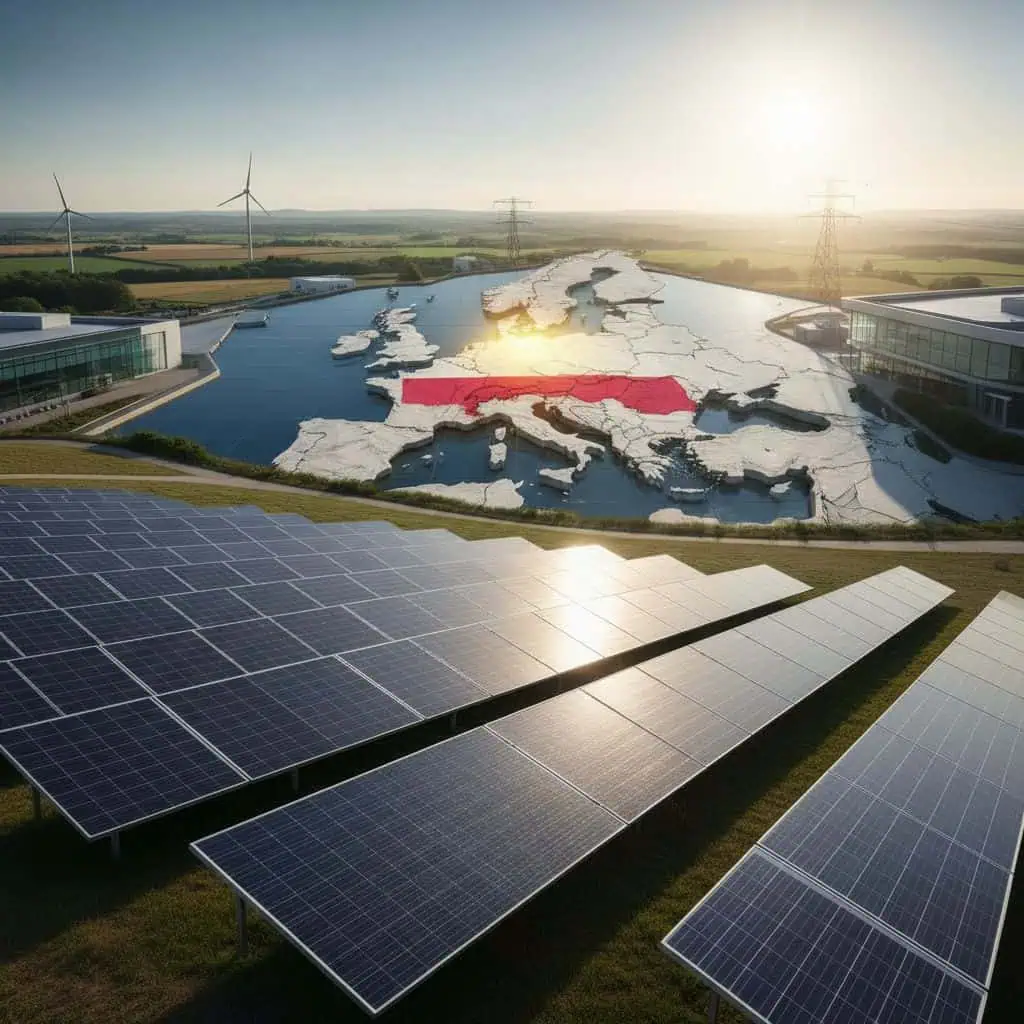
Solar Panels Poland installs hit a sweet spot in 2026. solar panels Poland costs land 2-4k EUR/kWp after grants, with paybacks under 8 years. Here are 7 proven cost, grant, and install wins for homeowners.
Table of Contents
Table of Contents
TL;DR — solar panels in Poland: solar panels in Poland adoption is climbing fast as grants tighten and tariffs rise. This guide breaks down what solar panels in Poland actually costs in 2026, the grants worth claiming, and the seven smart moves to make before incentives shift.

Solar choices in Poland affect costs, grants and installation risks; you should compare prices, apply for government grants, and hire certified installers to avoid electrical hazards while securing long-term savings.
Key Takeaways:
- Average residential system (4-6 kW) costs about 20,000-40,000 PLN before subsidies; typical payback 5-10 years depending on household consumption and electricity prices.
- Available grants include Mój Prąd (direct subsidy for households, historically up to several thousand PLN), Czyste Powietrze (loans/grants for broader energy upgrades), and local/EU programs; combining support can cut upfront costs significantly.
- Installation steps: site assessment and sizing, panel and inverter selection, obtain grid-connection approval from the distribution operator, sign contract with installer, install and commission, register for subsidies and appropriate metering.
- Regulations and billing changed after 2022 for prosumers; check current net-billing/compensation rules and required paperwork with your local DSO to understand how exported energy is valued.
- Maintenance and warranties: panels need minimal upkeep (annual inspection and occasional cleaning); expect 20-30 year performance warranties for panels and 5-12 year warranties for inverters-budget for eventual inverter replacement.
Economic Overview: Installation Costs and Available Grants
Estimate your total outlay including equipment, installation, and permits; typical small residential systems cost around 20,000-35,000 PLN, with payback often under a decade depending on consumption and export rules. You should factor in maintenance and warranty terms, because poor installation can void warranties and create safety hazards.
Detailed Breakdown of Initial Investment Costs for Residential Systems
Breakdown shows panels and the inverter make up the bulk of expenses, followed by mounting, cabling, electrical work and labor; grid connection or meter upgrades add extra charges. You should expect optional batteries to increase the bill substantially, with battery systems sometimes adding 30-100% to total cost.
Navigating Government Grants: The “Mój Prąd” and “Czyste Powietrze” Programs
Programs such as Mój Prąd and Czyste Powietrze can reduce your upfront cost by thousands of PLN; eligibility depends on property type, technical specs, and household income in some cases. You must submit invoices, installer certificates and equipment serial numbers when applying to avoid delays or rejection.
Mój Prąd targets new PV installations and Czyste Powietrze supports broader energy upgrades, so you can combine aid if you meet criteria; application windows and funding pools are limited, making timely submission vital.
Financial Benefits of the Thermomodernization Tax Relief and Local Subsidies
Tax relief for thermomodernization lets you deduct eligible renovation and installation expenses over multiple years, reducing your effective cost and tax burden. You should keep all receipts and file correctly, since missing documentation can forfeit the relief.
Local subsidies vary by gmina and may include direct grants, low-interest loans or property tax rebates; you should check municipal portals early because local funds often run out quickly and rules differ per locality.
Step-by-Step Guide to the Solar Installation Process
| Phase | Key Actions |
|---|---|
| Phase One | Site audit, technical design, permits |
| Phase Two | Mounting, wiring, safety checks |
| Phase Three | Grid connection, inspections, documentation |
Phase One: Professional Site Audit and Step-by-Step Technical Design
| Inspection | Outcome |
|---|---|
| Roof, shading, electrical panel | Permit-ready schematics and load calculations |
You schedule a certified audit that documents roof condition, orientation and shading while the designer produces a permit-ready technical plan with panel sizing and cable runs; the report will flag structural risks to address before mounting and confirm expected energy yield.
Phase Two: Physical Mounting Procedures and Electrical Safety Standards
| Mounting | Safety |
|---|---|
| Rails, anchors, panel alignment | Grounding, isolation, certified components |
Your installer mounts rails and panels with corrosion-resistant anchors, sets tilt and spacing for maximum output, and seals penetrations to avoid leaks; maintain clearances and inspect fastenings to prevent mechanical failures.
Follow strict electrical rules by isolating circuits, using certified inverters, and applying correct grounding; lock out power and test for high-voltage risks before energizing the system.
Phase Three: Finalizing Grid Connection and Legal Documentation with the Operator
| Grid | Documentation |
|---|---|
| Application, inspection, meter setup | Connection agreement, permits, compliance certificates |
Contact the distribution operator to submit connection applications, provide the technical design and safety certificates, and arrange the mandatory inspection that precedes activation.
After the operator’s approval, sign the connection agreement, retain copies of approved permits, and expect a meter upgrade and final activation within the operator’s stated timeframe.
Weighing the Pros and Cons of Solar Investment in Poland
You should balance the significant upfront cost and installation time against long-term savings, while noting incentives and local climate that affect returns; the table below summarizes core benefits and risks.
| Pros | Cons |
|---|---|
| Lower electricity bills | High initial investment |
| Available grants and net-metering | Variable payback depending on usage |
| Reduced carbon footprint | Panel degradation over decades |
| Increased property value | Roof suitability and shading limits |
| Protection against price shocks | Upfront paperwork for permits and subsidies |
| Compatibility with battery storage | Potential maintenance and inverter replacement |
Comprehensive Analysis of the Economic and Ecological Pros and Cons
Costs and emissions should be weighed together: you may recover the investment within 6-12 years while cutting household CO2 emissions substantially; check local tariffs to refine estimates.
| Economic | Ecological |
|---|---|
| Reduced monthly bills | Lower household emissions |
| Access to subsidies | Resource use in manufacturing |
| Long-term asset value | Recycling challenges for panels |
| Stable energy costs | Positive public health impact |
Evaluating Energy Independence Against Long-Term Maintenance Requirements
Self-sufficiency appeals because you can cut dependence on grid suppliers and gain resilience during short outages, but adding batteries increases cost and complexity.
| Independence | Maintenance |
|---|---|
| Reduced grid reliance | Periodic cleaning needed |
| Backup during outages | Inverter replacement ~10-15 years |
| Potential full off-grid setup | Battery degradation over time |
| Energy cost predictability | Service and inspection costs |
Maintenance planning must include expected inverter replacement, warranty checks and a budget for occasional repairs so you preserve system output and avoid unexpected failures.

Expert Tips for Maximizing Efficiency and System Longevity
You can extend system life by choosing high-efficiency modules, correct tilt and orientation, and scheduling inspections to catch wiring or inverter faults early. Recognizing seasonal output shifts and small degradation trends helps you plan maintenance before failures occur.
- solar panels
- inverter
- warranty
Seasonal Maintenance Tips for Cleaning Panels and Managing Snowfall
Your cleaning routine should use soft brushes or a leaf blower and avoid abrasive cleaners to prevent surface damage. The quick removal of heavy snow with a roof-safe tool reduces mechanical stress and energy loss.
- snow removal
- soft brush cleaning
- anti-ice measures
Performance Monitoring Tips to Identify and Resolve Yield Fluctuations
To detect yield changes, compare daily kWh to expected values and enable inverter alerts so you see drops fast. Any unexplained dip should prompt string checks or professional inverter diagnostics.
- real-time monitoring
- energy yields
- inverter alerts
Check your logbook and cloud platform for recurring patterns and correlate with weather and shading events to rule out environmental causes. Any persistent anomalies need a certified technician to avoid long-term production loss.
- performance logs
- shading analysis
- diagnostic reports
Contractor Selection Tips: How to Vet and Choose a Certified Polish Installer
When choosing an installer, you must verify certifications, local references, and detailed written quotes to compare scope and exclusions. After confirming insurance and warranty terms, sign a contract that specifies panel models, mounting, and performance guarantees.
- certified installer
- written quote
- insurance
Verify installer memberships in Polish industry bodies, request sample installations, and check post-installation service plans before committing. After reviewing client feedback and warranties, schedule installation during drier months to reduce delays.
- references
- service plan
- warranty terms
Conclusion
On the whole you can cut energy bills and reduce emissions by installing solar panels in Poland, with payback usually within 6-10 years depending on system size and subsidies.
You should assess local grants, connection costs and installer credentials, and plan for orientation, panel quality and maintenance to secure long-term performance and return on investment.
Key Takeaways: Solar Panels in Poland
- Map solar panels in Poland grants first — incentives shape effective cost more than panel price.
- Compare solar panels in Poland installer quotes — pricing varies 25-40% between certified installers.
- Track solar panels in Poland payback timing — typical horizon is 6-10 years in 2026.
- Plan solar panels in Poland battery sizing — storage shifts ROI faster than extra panels.
- Lock in solar panels in Poland permits early — queue times are the silent project killer.
Apply Solar Panels in Poland Decisions to Your Home
Start with grant eligibility then compare solar panels in Poland quotes before any installer visit.
- how solar panels Slovenia compares to solar panels in Poland
- solar power Croatia grants vs solar panels in Poland subsidies
- solar energy Slovakia financing vs solar panels in Poland costs
For independent industry data on capacity, costs and grants, see the Solar Energy Industries Association.
Key Takeaways: Solar Panels Poland
- Mój Prąd grant for solar panels Poland covers up to 7,000 PLN per install.
- Czyste Powietrze stacks with solar panels Poland for low-income households.
- Net billing replaced net metering — solar panels Poland payback now 6-9 years depending on consumption.
- Battery rebates alongside solar panels Poland add 5,000-10,000 PLN per system.
- VAT relief on solar panels Poland drops install cost an extra 8% for primary residences.
Apply for Solar Panels Poland Now
Putting solar panels Poland on your roof starts with a free quote from 3 licensed installers and a 24-hour electricity diary.
- Slovenia’s solar panels Poland equivalent — costs compared
- Croatia’s grant scheme alongside solar panels Poland
- Baltic states vs solar panels Poland — ROI comparison
For authoritative solar industry data see the Solar Energy Industries Association.
FAQs: Solar Panels Poland
Q: How much do solar panels cost in Poland?
A: Costs vary by system size, quality of panels and inverter, mounting complexity, and whether you add battery storage. Typical market prices (2024) are about 3,000-6,000 PLN per kW installed.
Example ranges: a 3 kW system ~9,000-18,000 PLN, a 5 kW system ~15,000-30,000 PLN, a 10 kW system ~30,000-60,000 PLN before any subsidies. Battery storage adds 10,000-60,000 PLN depending on capacity and chemistry.
Payback depends on household consumption, electricity price, and grants; typical simple payback is roughly 5-12 years for grid-tied systems without batteries.
Q: What grants, tax reliefs and incentives exist for households?
A: National and local programs can reduce upfront costs. The Mój Prąd program has offered direct subsidies for residential PV installations in multiple rounds.
The Czyste Powietrze program can support installations when combined with heating system upgrades.
Tax relief under the termomodernization deduction (ulga termomodernizacyjna) allows some PV expenses to be deducted from taxable income for qualifying taxpayers.
Municipal and regional programs or low-interest loans from banks and energy agencies sometimes top up central funding.
Eligibility rules, amounts and application windows change, so confirm current conditions on official government or your municipal website before applying.
Q: What are the steps to install solar panels in Poland?
A: Start with an energy audit that shows annual kWh consumption and a site assessment for roof orientation, tilt and shading. Obtain multiple quotes that include equipment specification, mounting method and warranties.
Submit a grid connection notification or application to your distribution system operator (DSO) and sign necessary connection agreements; small micro-installations usually require notification rather than a full building permit, but local rules can vary.
Schedule installation, inverter commissioning and meter upgrade or reconfiguration by the DSO. Apply for grants or tax relief with required documents after commissioning.
Typical timeline from first quote to working system is 4-12 weeks depending on permit and DSO processing times.
Q: How do I know if my roof is suitable and what system size do I need?
A: South-facing roofs with a tilt of 25-40 degrees give the best yields in Poland, but east- or west-facing roofs and flatter angles can still be effective. Avoid heavy shading from trees or nearby buildings.
Roof material (tiles, metal, concrete) and structural condition must be checked to confirm mounting compatibility and load capacity. To estimate size, divide annual household electricity use (kWh/year) by expected yield per kW for your location.
Typical Polish yields are about 800-1,000 kWh/kW/year; using 900 kWh/kW as a simple average, a household using 4,500 kWh/year would need roughly a 5 kW system (4,500 ÷ 900 ≈ 5 kW).
Q: What maintenance, warranties and performance can I expect?
A: Solar panels usually carry performance warranties of 20-25 years with annual degradation around 0.3-0.8% per year, and product warranties of 10-15 years for defects. Inverters commonly have 5-12 year warranties; extended warranties are available.
Annual or biannual visual inspections and inverter checks are recommended, with cleaning only when significant soiling or shading reduces output.
Battery systems need manufacturer-recommended maintenance and have shorter warranty periods (often 5-10 years). Monitor production via an app or meter to detect drops in output early and keep documentation for warranty claims and insurance.