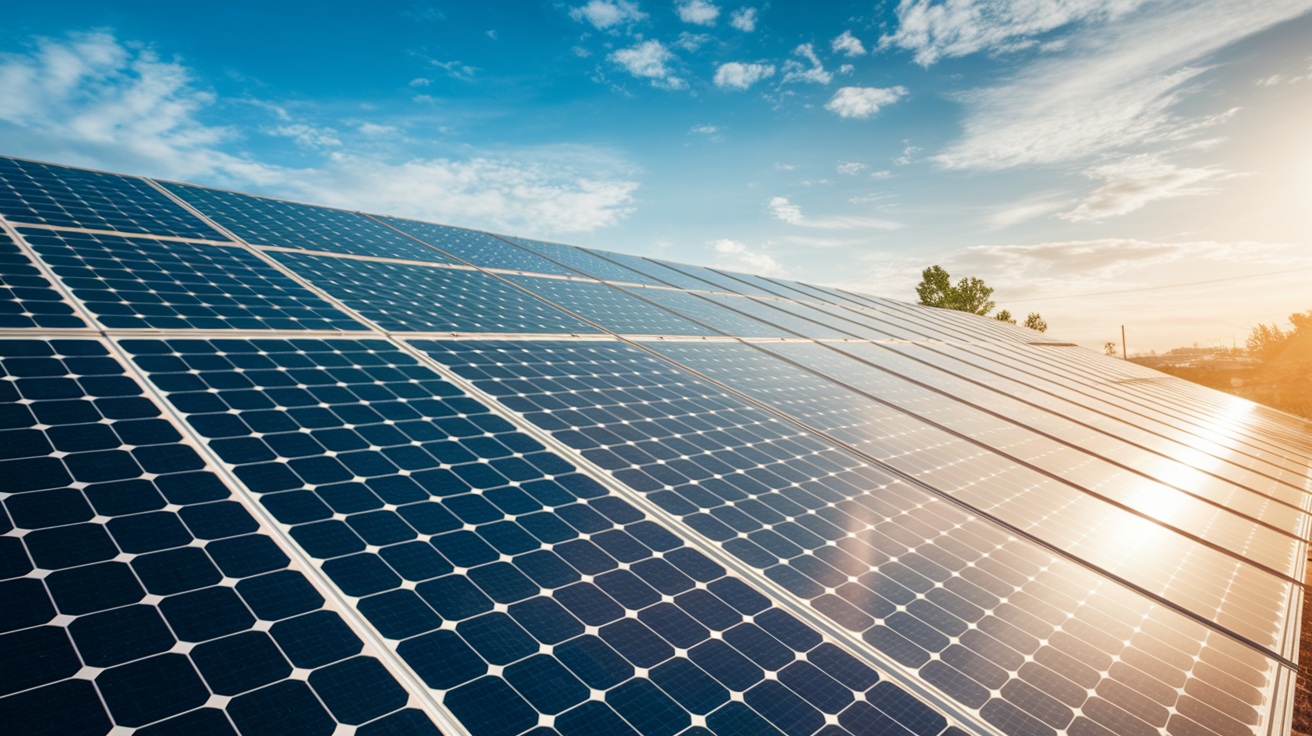
This guide explains solar panel degradation and how it reduces your system’s energy output, typically about 0.5-1% per year, creating a long-term performance and cost risk; routine maintenance and warranties can help preserve output and extend system life.
Key Takeaways:
- Solar panels degrade over time because cell materials and interconnections deteriorate from light-induced degradation (LID), potential-induced degradation (PID), thermal cycling, UV exposure, moisture ingress, microcracks, and soiling.
- Typical degradation rates for modern crystalline silicon panels range roughly 0.3%-0.8% per year, with many warranties guaranteeing about 80%-90% of rated output after 25 years.
- Cumulative degradation reduces annual energy yield, extends payback periods, lowers lifetime revenue, and can affect system sizing and financial projections.
- Nonuniform degradation across modules causes mismatches that create hot spots, reduce inverter performance, and increase maintenance or replacement needs.
- Mitigation measures include selecting low-degradation modules, proper system design and grounding to prevent PID, quality installation and sealing, routine cleaning, and performance monitoring to catch issues early.
Understanding the Science Behind Efficiency Loss
The Physics of Photovoltaic Aging
Silicon cells experience microscopic changes from prolonged UV exposure, heat, and moisture that reduce charge-carrier mobility and increase recombination; you will notice an early effect called light-induced degradation (LID), often causing 1-3% loss in the first year.
Micro-cracks, encapsulant yellowing, and solder fatigue create resistive paths and hot spots that can accelerate failure; you can mitigate these through quality materials, correct mounting, and temperature control.
Standard Industry Degradation Benchmarks
Manufacturers typically guarantee around 80-90% output after 25 years, implying average degradation near 0.5-1% per year; you should compare datasheet rates to field performance when evaluating modules.
Warranty language often assumes linear degradation but excludes mechanical damage, PID, or installation faults, so you must check IV-curve trends and independent IEC test reports to confirm long-term expectations.
Environmental and Operational Factors Affecting Longevity
- solar panel degradation
- output
- longevity
- thermal cycling
Environmental and Operational Factors
| Factor | Impact on output |
|---|---|
| Temperature cycling | Accelerates microcracks and solder fatigue, reducing energy yield |
| UV & Humidity | Drives delamination and corrosion, lowering cell efficiency |
| Mechanical stress | Causes glass breakage, frame damage and hot spots that cut performance |
| Soiling & shading | Produces persistent power losses and uneven heating |
Impact of Extreme Temperature Fluctuations and Thermal Cycling
Heat cycles produce repeated expansion and contraction that form microcracks, so you will observe steady output decline and increased mismatch across modules.
Effects of UV Exposure and Humidity on Cell Integrity
UV exposure breaks down encapsulant films and causes yellowing, which reduces light transmission and accelerates degradation you will measure as lower yield.
Moisture ingress promotes corrosion of busbars and delamination at cell interfaces, so you should inspect seals and edge bonds to limit performance loss.
Mechanical Stress from Wind, Snow, and Improper Handling
Wind-driven debris, heavy snow loads and poor handling induce glass cracks and frame flex that create hot spots and sudden power drops you must address quickly.
Handling errors during installation can introduce invisible cell damage; Perceiving early signs like frame bowing, small power losses, or discoloration lets you plan repairs before complete module failure.
Step-by-Step Guide to Monitoring System Output
Monitoring Checklist
| Action | What to log |
|---|---|
| Establish baseline | String kWh, irradiance, module temp, inverter efficiency |
| Daily/weekly checks | Production vs. expected, alarm events, communication status |
| Set alerts | Thresholds for % drop, outages, rapid deviations |
| Inspections | Visual defects, soiling, thermal hotspots, connector integrity |
| Record keeping | Time-stamped logs and photos for warranty or analysis |
Establishing Performance Baselines Post-Installation
Establishing a clear performance baseline immediately after installation lets you measure degradation against expected output. You should log string-level kWh, irradiance, module temperature, and inverter efficiency over several representative days, then compute weekly and seasonal averages to set your reference. Mark any reduced output that exceeds manufacturer degradation curves or contract thresholds.
Utilizing Monitoring Software to Identify Anomalies
Monitor your system with software that delivers string- and inverter-level data, weather correlation, and timestamps so you can spot deviations quickly. You should configure automated alerts for drops beyond set percentages and for communication failures, prioritizing events that indicate rapid drops or persistent string underperformance.
Analyze trends by comparing current production to the baseline and irradiance-normalized expectations; export logs to support warranty claims or maintenance scheduling. You can triage fixes faster when software highlights repeated anomalies and ties them to specific strings or time windows.
Conducting Visual and Thermal Inspections for Early Detection
Inspect panels and mounting hardware regularly for soiling, cracks, delamination, shading changes, and loose connectors, then correlate findings with production dips. You should document defects and tag them in your logs so technicians address hot spots or mechanical failures before they worsen.
Capture thermal images under load to reveal electrical hazards like hot cells, bypass diode failures, or uneven string heating, and save time-stamped photos alongside inverter data to speed diagnostics and support claims.
Pros and Cons of Various Solar Technologies Relative to Durability
| Pros | Cons |
|---|---|
| Monocrystalline: higher efficiency, typically slower degradation | Monocrystalline: higher upfront cost, microcrack sensitivity |
| Polycrystalline: lower cost, simpler production | Polycrystalline: lower efficiency, generally faster output loss |
| Thin-film (a‑Si): better low‑light performance, flexible form factors | Thin-film (a‑Si): higher degradation rates, lower area efficiency |
| CIGS: good heat performance, reasonable efficiency | CIGS: material variability, long‑term stability concerns |
| CdTe: cost‑effective production, decent performance | CdTe: moisture sensitivity, end‑of‑life recycling/toxicity issues |
| PERC: improved nominal efficiency | PERC: added complexity, potential rear-side degradation modes |
| N‑type cells: lower light‑induced degradation, longer life | N‑type cells: higher manufacturing cost |
| P‑type cells: widely available, lower upfront price | P‑type cells: more prone to LID and PID |
| Bifacial: increased energy yield from rear side | Bifacial: requires optimal installation, uneven soiling risk |
| Glass‑glass modules: superior encapsulation, reduced delamination | Glass‑glass modules: heavier, higher cost |
Comparing Monocrystalline and Polycrystalline Lifespans
Monocrystalline panels give you slower annual degradation (often ~0.3-0.5%/yr) and higher per‑panel yield, so your system maintains output longer.
Polycrystalline modules let you lower initial cost, but you may see slightly faster performance decline over decades, which reduces lifetime energy production.
Advantages and Drawbacks of N-Type vs. P-Type Cells
N-type cells provide you with lower LID and reduced long‑term degradation, increasing lifetime energy and payback for systems where longevity matters.
P-type cells offer you broader availability and lower upfront cost, yet they often exhibit higher susceptibility to LID and PID, which can shorten effective output.
You can favor N-type when maximizing lifetime yield outweighs initial savings, while P-type may suit you if budget constraints dominate but you accept slightly higher degradation risk.
Expert Tips for Mitigating Degradation and Maximizing ROI
- Regular maintenance to limit soiling losses and detect early degradation
- Optimized cooling and spacing to cut temperature-driven performance loss
- Tier-1 modules and high-quality BOS to protect long-term output and ROI
Best Practices for Routine Maintenance and Cleaning
Inspect panels quarterly for soiling, bird droppings and shading; you should use soft brushes and deionized water and log performance so you can detect rising degradation trends early.
Strategic Ventilation and Cooling Techniques for Arrays
Position arrays with sufficient under-panel clearance and staggered rows so you enhance natural convection and lower operating temperature, reducing temperature-related degradation.
Use angled mounts and open-rail racking to prevent heat trapping; you will reduce the risk of hotspots and sustain higher daily output in hot climates.
Elevate combiner boxes and keep wiring exposed to airflow so you avoid localized heating that accelerates irreversible power loss.
Selecting Premium Components and Tier-1 Manufacturers
Choose modules and inverters with documented low annual degradation rates and clear warranty coverage so you protect capacity retention and long-term ROI.
Assess manufacturer service responsiveness and third-party test results to minimize failure risk and unexpected output drops.
Assume that you prioritize Tier-1 certifications and independent performance guarantees to reduce the chance of early accelerated degradation.
Summing up
The long-term decline in solar panel performance reduces your system’s output each year as materials degrade from UV exposure, thermal cycling, and microcracks. You should expect common degradation rates around 0.5-1% per year, which affects energy yield, payback time, and system sizing, so monitor production, choose quality modules, and factor degradation into your financial and maintenance plans.
FAQ
Q: What is solar panel degradation?
A: Solar panel degradation describes the gradual loss of a module’s electrical output over time. Main contributors include light-induced degradation (LID), potential-induced degradation (PID), microcracks, UV exposure, thermal cycling, humidity and soiling. Manufacturers express degradation as an annual percentage or via performance warranties, for example a linear warranty guaranteeing around 80-85% of nameplate power after 25 years. Degradation reduces energy yield and alters expected payback timelines.
Q: What causes degradation and how do common failure modes work?
A: Several physical and chemical mechanisms drive degradation. Light-induced degradation (LID) causes an initial drop in output when modules first receive sunlight due to boron-oxygen complexes in silicon. Potential-induced degradation (PID) arises from voltage-induced leakage currents and can reduce strings of modules unevenly. Microcracks form from mechanical stress and thermal cycling; they can interrupt cell conductors and increase series resistance. UV exposure and encapsulant browning reduce optical transmission over years. Soiling and shading lower output but are reversible with cleaning; corrosion and solder joint fatigue produce permanent losses.
Q: How fast do solar panels degrade and what rates should I expect?
A: Modern crystalline silicon modules typically degrade at about 0.3-0.8% per year after the first-year drop. First-year light-induced degradation can add 1-3% of initial loss for some cell types. Thin-film technologies vary; cadmium telluride (CdTe) often shows around 0.5%/yr, while amorphous silicon can be higher. Manufacturer datasheets and third-party test results provide the best guide; warranty terms commonly promise no more than 0.5%-0.7% annual loss and approximately 80-85% power at year 25.
Q: How does degradation affect system output and electricity savings over time?
A: Degradation lowers annual energy production, producing compounding losses across the system life. A 0.5%/yr degradation rate yields roughly (1-0.005)^25 ≈ 88% of original output after 25 years, a 12% cumulative loss. Higher rates or additional early losses (for example 1-3% LID) push lifetime production down further and reduce return on investment and carbon offset estimates. Accounting for degradation in financial models provides realistic payback and helps size battery storage or grid reliance.
Q: What can be done to slow degradation and detect problems early?
A: Select high-quality modules with proven field performance and conservative degradation warranties. Install with adequate ventilation, correct torque on racking fasteners, and stress-minimizing mounting to reduce microcrack risk. Use PID-resistant modules or mitigation devices where high system voltage or soil conductivity increases risk. Perform routine cleaning, visual inspections, I-V curve testing and remote monitoring to spot output declines; replace or repair damaged modules and address design issues quickly. Keep records and use manufacturer warranties or performance guarantees for modules that degrade beyond specified limits.